
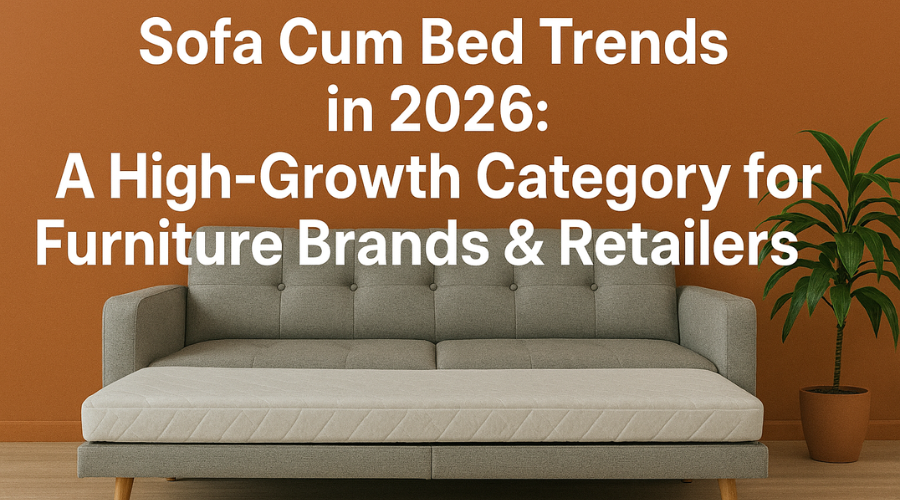
As urbanization continues to compress living spaces worldwide, multifunctional furniture demand is reaching new highs in 2026. Sofa cum beds have evolved beyond simple space-saving solutions, they are now premium lifestyle products combining comfort, technology, sustainability, and modular design.
For furniture manufacturers, exporters, wholesalers, retailers, and project suppliers, the sofa cum bed segment represents a fast-expanding, high-margin market across residential, hospitality, rental housing, and real estate sectors.
Understanding the latest 2026 sofa cum bed trends can help businesses refine product lines, strengthen brand positioning, and increase profitability.
Ease of use remains one of the strongest purchase drivers in 2026.
Modern sofa cum beds now feature one-step or instant unfolding mechanisms, allowing effortless transformation without heavy lifting. This feature appeals strongly to:
Urban apartment buyers
Elderly users
Short-term rental and hospitality clients
Premium brands are expanding motorized conversion systems, offering button-controlled or remote-based transformations. These models target luxury residential projects, serviced apartments, and upscale hotels.
B2B Advantage: Easy-conversion models increase product differentiation, customer satisfaction, and premium pricing potential.
Storage integration has become a standard expectation rather than a bonus.
2026 designs include larger, reinforced hidden storage areas for bedding, blankets, seasonal items, and personal belongings — enhancing value perception.
Pull-out drawers, lift-up platforms, and soft-close storage compartments are increasingly featured in mid-range and premium models.
B2B Advantage: Storage-focused designs improve retail conversion rates, product competitiveness, and profit margins.
Sustainability is now a core requirement in export and premium markets.
Manufacturers are adopting recycled plastics, metals, and reclaimed textiles, aligning with circular economy standards.
Growing demand exists for linen, bamboo fabric, organic cotton, and low-chemical fabrics, especially in eco-conscious markets.
Frames made from FSC-certified and responsibly sourced wood are becoming key selling points in Europe, North America, and high-end Asian markets.
B2B Advantage: Sustainable sourcing enhances brand credibility, export eligibility, and corporate buyer trust.
Consumers now expect true bed-quality comfort from sofa cum beds.
Top 2026 mattress options include:
Memory foam
Hybrid foam
Pocket spring systems
Cooling gel-infused foam
These technologies enable brands to compete directly with mattress manufacturers and justify premium pricing.
Upgraded frames and cushioning systems now provide long-term durability, posture support, and consistent sleeping comfort.
B2B Advantage: Comfort-driven innovation boosts repeat purchases, customer retention, and premium positioning.
Customization is becoming a major sales driver in 2026.
Brands now offer expandable modular systems where customers can add:
Corner sections
Ottomans
Chaise lounges
Additional seating modules
Flexible configurations support homeowners, landlords, developers, and hospitality operators seeking adaptable layouts.
B2B Advantage: Modular products increase upselling potential, cross-selling opportunities, and average order value.
Technology integration in furniture continues to accelerate.
USB charging ports, wireless charging pads, and hidden power outlets are now common features.
Soft LED lighting enhances aesthetic appeal, nighttime usability, and mood customization.
High-end models allow smartphone control for:
Mattress firmness
Lighting
Reclining
Automated conversion scheduling
B2B Advantage: Smart-enabled furniture attracts premium buyers, tech-oriented consumers, and luxury real estate developers.
Slim profiles, neutral color palettes, and clean lines remain dominant in urban-focused markets.
Growing interest in bold colors, textured fabrics, geometric patterns, and premium finishes enables brands to launch design-forward collections.
Combining wood, metal, leather, and fabric enhances perceived quality and strengthens premium branding.
B2B Advantage: Strong design identity improves retail shelf appeal and brand recognition.
Increasing demand for hygienic, allergy-safe, and antimicrobial fabrics, particularly in family, hospitality, and healthcare-related environments.
Improved ergonomic designs reduce muscle strain, back pain, and posture-related discomfort, enhancing product credibility.
B2B Advantage: Wellness-driven features strengthen institutional contracts and long-term customer trust.
Improved automation and lean production processes enable manufacturers to deliver high-end features at competitive costs.
Brands increasingly benefit from DTC sales models, improving profit margins, brand control, and customer insights.
B2B Advantage: Businesses can scale faster, optimize pricing, and expand into mass-premium markets.
The sofa cum bed category in 2026 represents a strategic growth engine rather than a secondary product line.
To stay competitive, furniture businesses should prioritize:
Effortless conversion mechanisms
Storage-integrated designs
Sustainable materials & certifications
Premium mattress comfort
Modular & customizable collections
Smart technology features
Contemporary design aesthetics
Health-focused materials
Scalable, cost-efficient manufacturing
In 2026, sofa cum beds are transforming into high-value lifestyle furniture solutions. Brands that invest in innovation, sustainability, ergonomic comfort, smart technology, and modular design will gain a strong competitive advantage in domestic and export markets.
For manufacturers, wholesalers, exporters, retailers, and project suppliers, this category offers significant potential for revenue growth, portfolio expansion, and long-term market leadership.
 2894625074@qq.com



 17806070028