
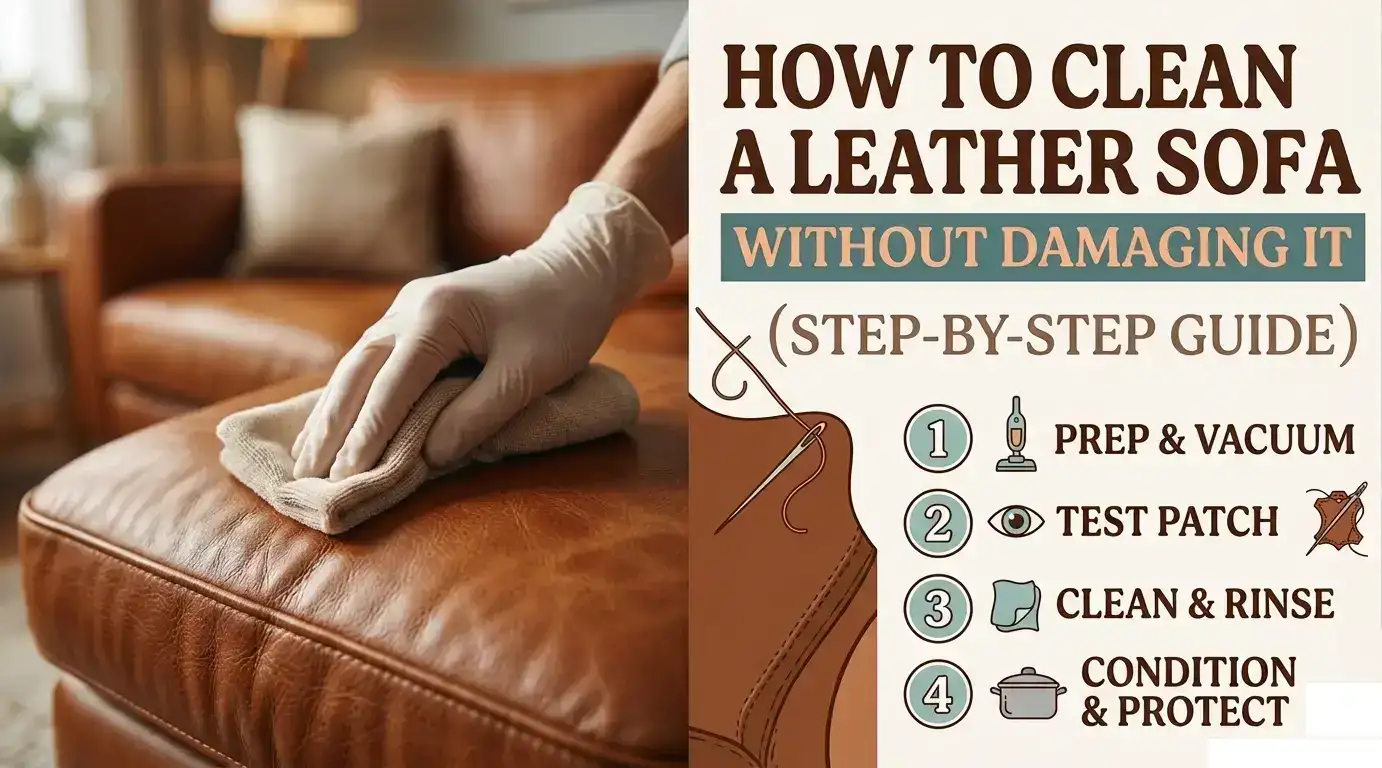
A leather sofa can age beautifully if it is maintained and taken care of. An aged leather sofa softens beautifully over time and develops a rich, natural patina. It is not just furniture anymore. It is a part of your home's character.
The truth is, most people never see that version of their leather sofa. Instead, their leather becomes dry, or dull long before it should. Why? Not because leather is difficult to care for, but because no one ever showed them the right way to clean it. They used the wrong products. They skipped the crucial steps. And slowly, over time, the damage added up.
Leather care is not about harsh chemicals or complicated routines. It is about understanding the material and then taking small, consistent actions.
In this blog, we will teach you a step by step approach on how to clean a leather sofa, whether it is brand new or has been in your family for a decade. You will discover how to identify your specific leather type, clean it without causing damage, and condition it so it stays soft and supple for years to come.
Before you begin, gather the following supplies. Having everything ready keeps the process smooth and avoids rushing.
Soft brush attachment for your vacuum cleaner: This helps lift dust without scratching the texture of the sofa.
Two or three white microfiber cloths: White should be your choice because dyed cloths can transfer color. That becomes almost guaranteed when the leather surface is damp.
Mild liquid dish soap: The correct choice is a simple formula that contains no bleach or abrasives. (For protected/pigmented leather, a very dilute mix is usually enough.)
Distilled water: Tap water contains minerals, and these can react with some finishes, spoiling the surface or discoloring it. Distilled water is better and will prevent these problems.
A leather conditioner: Pick one made for furniture upholstery leather. Refrain from choosing shoe polish or heavy oils, as they are not the same thing. Brands like Leather Honey or Lexol are commonly used and easy to find.
This step is most vital as it can help you avoid commonly occurring mistakes made by amateurs. Leather finishes are quite diverse, and the safest approach is to be aware of what you’re working with.
Pigmented (protected) leather has a colored coating on the surface. It has a uniform thickness and feels smooth. This is common on many mass-market sofas and usually tolerates gentle soap-and-water cleaning.
Aniline leather has little to no protective surface coating. Natural grain and markings are more visible, and it often feels very soft. It’s beautiful, but it can be spotted easily, sometimes even with plain water.
Start by inspecting the manufacturer tag, care booklet, or product page. If you cannot find these, you should do a water test. This involves placing a tiny drop of distilled water on the leather:
This test is not 100% guarantee and will only give you an idea regarding the material and not the exact material composition. If the leather absorbs water quickly or darkens easily, treat it as more delicate and avoid soap.
Dust and crumbs don’t just look messy; they act like grit. And that grit rubbing on the sofa texture dulls the finish.
To get rid of crumbs, you need to vacuum. Proceed to attach the soft brush tool to your vacuum hose and lightly go over the sofa. Make sure to cover all surfaces from back, arms, cushions, and crevices. Seams and tufted areas attract the dust most, so make sure not to miss them. If the seat cushions come off, lift them and vacuum underneath.
Rotating brush heads can be too aggressive for leather, and hard plastic tools may scuff finishes. So if you own a vacuum with only hard attachments, hover the tool slightly above the surface and let the suction do the rest.
Spot testing is the cheap insurance policy. The way to do this properly is to use your chosen cleaner (diluted dish soap solution for protected/pigmented leather, or a specialty leather cleaner). Then moisten the microfiber cloth. Make sure to wring it so it is damp just the right amount. Choose an area to test that is not very visible, like the inside back panel, underside, and lightly wipe a small patch.
Wait five to ten minutes, then check:
If you see any of these symptoms, pause and switch products or methods.
Work in small sections (about one square foot) since small sections are easier to manage.
Mix 1–2 drops of mild dish soap into two cups of warm distilled water. No need for excessive lathering and barely soapy water is just fine.
Dip a microfiber cloth into the solution and wring it until it’s nearly dry. Wipe with light, circular motions. Once the cloth starts getting dirtier, switch to a clean area of the cloth so you’re not spreading dirt around.
Use a cleaner labeled for aniline/unfinished leather. If you don’t have one, stick to distilled water only and use very little moisture. The way to wipe is to lightly dampen a cloth and avoid scrubbing. The pressure exerted should be light.
Too much water can seep into seams, reach padding, and the absorbed water in the padding can create an odor. It can also leave uneven darkening on more absorbent finishes.
If you come across a sticky spot during cleaning, the correct way to wipe it is to dab and lift rather than scrubbing it hard. Aggressive scrubbing can remove finish on protected leather.
Do not forget to dry the area as you proceed. After wiping a small section with your damp cloth, use a separate dry microfiber cloth to buff the area. This is necessary as it helps in removing leftover moisture and keep the finish looking even. Once you’ve finished the whole sofa, let it air dry for a few hours by leaving it under a ceiling fan.
High heat and direct sun can dry leather unevenly, leaving it feeling stiff. Gentle airflow is the better drying approach.
Cleaning removes grime, but the side effect is that it also strips some of the oils that help leather stay flexible. Conditioning helps prevent this.
For the conditioning procedure, put a small amount of conditioner on a clean microfiber cloth and rub it in using small circular motions, section by section. Apply a thin, even layer that is enough to coat the surface. Let the conditioner get absorbed for fifteen to thirty minutes, then buff with a fresh dry cloth.
For many homes, every six to twelve months works well. Sofas in places with a hot and dry climate require more frequent conditioning.
Skip kitchen oils (coconut/olive), vinegar-based DIY mixes, and saddle soap for most furniture leather. These products leave residue. They are chemically strong cleansers that can alter the finish or cause uneven darkening over time. It is better to purchase Upholstery-specific conditioners to be on the safe side.
This often means too much moisture or a more absorbent leather. To correct this let the sofa dry fully (up to 24 hours). In this way, spots will fade. If spots persist on protected leather, a matching dye product might help.
That means you have used too much cleaner or conditioner. This can be resolved by wiping lightly with a cloth dampened with distilled water only, then dry and buff. If tackiness persists, a product-specific residue remover is the solution.
Usually, leftover soap or conditioner. Buff with a dry microfiber cloth. If that doesn’t clear it, wipe very lightly with distilled water and dry again.
Cracking is usually a sign of Dryness, age, heat exposure, or skipped conditioning are the main causes of cracking. Conditioner may help slow further drying, but existing cracks generally don’t disappear.
A little routine care goes a long way. Vacuum weekly with a soft brush, blot spills promptly, and keep the sofa away from prolonged direct sunlight when you can. Rotate and fluff cushions so wear stays even. Condition on a consistent schedule (often every 6–12 months) so the leather stays comfortable and ages gracefully.
 2894625074@qq.com



 17806070028